There's a shot that stops a scroll every time — a smooth, rising aerial pull-back that starts on a rooftop or a field edge and reveals the full scope of a property, a site, or a crowd below. You've seen it in real estate listings, construction progress reels, and event highlight videos. That shot is no longer a luxury reserved for big-budget productions. Drone video production in Michigan is now accessible to the local businesses, contractors, real estate agents, and event organizers who need it — and Michigan Media House has the crew and the certification to deliver it.
This guide covers what aerial footage actually is, which Michigan businesses are using it (and why), what a professional drone shoot looks like from start to finish, and what you need to know before you book one.
What Is Drone Video Production — And Why Are Michigan Businesses Asking for It?
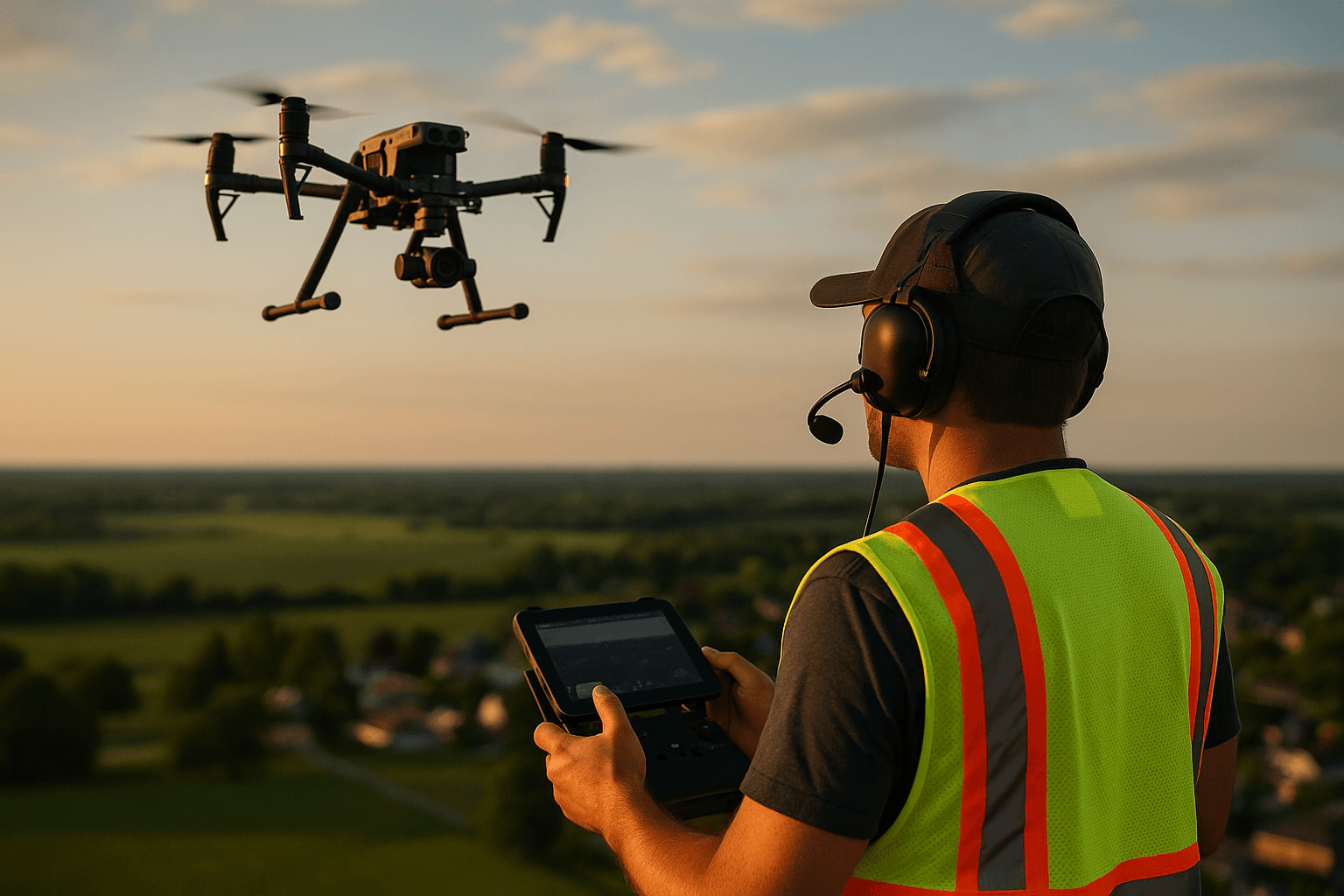
Drone video production is the capture of aerial video and photo content using remotely piloted unmanned aircraft systems (UAS) — commonly called drones. A licensed operator flies the drone while monitoring a live video feed, capturing footage from altitudes and angles that no ground-based camera can reach.
For Michigan businesses, the interest is practical. Aerial footage adds context that a standard camera simply can't provide:
- A real estate listing that shows a property's lot size, proximity to a lake, and neighborhood layout converts faster than one that doesn't.
- A construction site video that documents weekly progress from above gives clients and stakeholders a clear picture of the project without requiring a site visit.
- A grand opening or community event covered from above feels bigger — and looks bigger — than one shot from the parking lot.
The technology has matured rapidly. Modern commercial drones capture 4K footage with cinematic stabilization, and the shots they produce are indistinguishable from the high-end aerial footage that once required a helicopter and a six-figure production budget.
Top Use Cases: Real Estate, Events, Construction & Agriculture
Aerial video production in Michigan fits a wide range of industries. Here are the use cases we see most often across Jackson, Washtenaw, and Livingston counties:
Real estate. Listings with drone footage consistently outperform those without — in views, inquiries, and days on market. Whether it's a residential property in Grass Lake, a commercial building in Jackson, or acreage in rural Livingston County, aerial footage shows what a listing actually offers: lot size, topography, proximity to water, road access, and neighborhood context. Agents who invest in professional real estate video don't go back to stills-only listings.
Events and grand openings. We've covered ribbon cuttings, grand openings, and community events for local businesses across Michigan — and aerial coverage turns those moments into shareable content that has real reach. A wide aerial shot of a packed parking lot on opening day says more than a ground-level crowd photo ever could. Combine aerial footage with our event video production coverage and you leave with a full library of content from a single shoot.
Construction and development. Site documentation from the air gives developers, contractors, and clients a clear record of project progress. A weekly or monthly aerial shot series creates a compelling before-and-after story that's ideal for presentations, investor updates, and marketing materials once the project is complete.
Agriculture and land management. Michigan's agricultural sector uses drone footage for crop monitoring, land surveys, and promotional content. If you're marketing a farm stay, a U-pick operation, or agricultural property, aerial footage communicates scale and setting in a way that ground-based shots cannot.
Corporate and industrial. Campus-wide facility shots, warehouse exteriors, and manufacturing site overviews are standard requests for corporate communications teams, insurance documentation, and commercial real estate.
What to Expect from a Professional Drone Video Shoot in Michigan
A professional drone videography Michigan shoot is more organized than most clients expect. Here's what the process typically looks like:
Pre-production. Before we fly anything, we scout the location — either in person or via satellite map review — to identify optimal flight paths, safe takeoff and landing zones, any obstacles (power lines, tree lines, structures), and lighting windows. For outdoor shoots, golden hour (the hour after sunrise or before sunset) produces the most cinematic results. We confirm airspace clearance and any local restrictions before the shoot date.
Day of shoot. The operator arrives with the aircraft, a tablet-based controller with live video monitoring, backup batteries, and a safety kit. We perform a pre-flight checklist, confirm weather conditions, and brief any ground crew or clients present. Flights are conducted in controlled passes — we don't improvise in the air. Footage is reviewed on-site to confirm all required shots are captured before we pack up.
Post-production. Raw drone footage is color-graded and edited to match your deliverable — whether that's a short social clip, a property tour, or a longer marketing piece. For clients combining drone footage with ground-level coverage, everything is cut together into a seamless final edit.
FAA Part 107: Why Hiring a Licensed Drone Operator Matters
If someone is flying a drone commercially — meaning the footage is being used to promote a business, a property, or a service — the operator is required by federal law to hold an FAA Part 107 Remote Pilot Certificate. This is not optional. Flying commercially without a Part 107 certificate violates FAA regulations and exposes both the operator and the client to significant liability.
What Part 107 certification means in practice:
- The operator has passed a knowledge test covering airspace regulations, weather, aircraft performance, and emergency procedures.
- They are authorized to fly in controlled airspace (with prior FAA authorization via the LAANC system where required).
- They can legally operate above people and moving vehicles in waivered conditions.
- They carry appropriate liability insurance for commercial UAS operations.
When you hire aerial video production Michigan from Michigan Media House, you're working with a certified operator. We handle airspace authorization, comply with local ordinances, and operate within legal altitude limits. We also do not fly in restricted zones — near airports, over crowd-control situations, or in temporarily restricted airspace — without proper authorization.
How Much Does Drone Video Production Cost in Michigan?
Drone video pricing varies based on several factors: location complexity, shoot duration, number of deliverables, and whether ground-level footage is being combined with aerial. For a more detailed breakdown of what drives video production costs in general, see our Michigan video production pricing guide.
For drone video Michigan specifically, here's what shapes the cost:
- Location type. Rural or suburban locations in Jackson County or Livingston County are simpler to fly than dense urban environments requiring additional airspace coordination.
- Shoot duration. A single property flyover is a shorter engagement than a full event day with multiple passes and angles.
- Deliverables. A raw footage package differs in price from a fully edited, color-graded, music-licensed final cut.
- Combination shoots. Bundling aerial coverage with ground-level event or corporate video production — which is our most common booking — typically offers better value than two separate shoots.
We price drone projects honestly. You'll know what you're getting before we show up. If your scope is larger than one shoot can cover, we'll tell you that upfront too.
Ready to Add Aerial Footage to Your Next Project?
Whether you're listing a property in Grass Lake, documenting a construction project in Jackson, planning a grand opening in Chelsea, or building a brand video for your Michigan business, drone footage turns a good production into one that gets noticed.
Michigan Media House handles the full production — aerial and ground, capture and edit, from a crew that knows Michigan and works with the businesses that call it home. If you're thinking about adding aerial footage to your next project, we'd love to talk through what that looks like for your specific situation.
Looking to live stream your next event in addition to capturing it on video? See how we combine live streaming and full event video coverage in our Michigan event live streaming guide.