Most Michigan business owners think of video as a single deliverable: you hire a crew, film something, get a video, post it. Done.
That model is leaving enormous value on the table. A professional video shoot — planned correctly — isn't one piece of content. It's the raw material for a full video content strategy that keeps your business visible for weeks without another shoot day.
The businesses pulling ahead in Jackson County, Washtenaw County, and across the state aren't the ones filming the most. They're the ones filming strategically — building a hybrid content approach that pairs a cinematic long-form anchor with a library of short-form clips, all from a single production day.
Here's how it works, and why it's the most efficient marketing investment most small businesses can make right now.
What Is a Hybrid Video Content Strategy?
A hybrid video content strategy combines two formats that work together:
Long-form cinematic video — a two to four minute brand film, documentary-style segment, or client spotlight that tells a complete story. This is the anchor piece: deep, credible, and designed to hold attention. It lives on your website, your YouTube channel, and your Google Business Profile. It converts.
Short-form social clips — vertical-format Reels, YouTube Shorts, and TikToks cut from the same footage. Each one focuses on a single moment, tip, or soundbite. They're designed to reach new audiences, build platform presence, and drive traffic back to the anchor.
Neither format works as well alone. Long-form without short-form distribution gets buried. Short-form without long-form depth keeps people interested but never closes the trust gap needed for someone to make a call or book a service.
Together, they do what no single video format can do on its own: reach new people and convert them.
Why Michigan Businesses Need Both Formats in 2026
The research on this is consistent. Brands that combine long-form anchor content with short-form distribution outperform single-format strategies by more than 2x in both reach and engagement, per the 2026 Visla Trend Report. Meanwhile, Wistia's 2026 data shows that 51% of marketers now use AI tools for video scripting — which means original, authentic, professionally filmed content is more differentiated, not less.
For Michigan businesses specifically, this matters because of how local audiences behave:
- Discovery happens on short-form. A Reel or YouTube Short introducing your team, your service, or your location gets surfaced to new local viewers who've never heard of you.
- Conversion happens on long-form. Once someone's curious, they look you up. A three-minute brand film or client spotlight on your website answers the real question: Can I trust these people with my business?
The two formats serve different moments in the same customer journey. A hybrid strategy puts you in the right place at both moments.
One Shoot, Two Formats: How It Actually Works
The good news: you don't need two separate shoot days. A hybrid strategy is most efficient when it's planned before the camera comes out.
At Michigan Media House, a standard production day built for hybrid output looks like this:
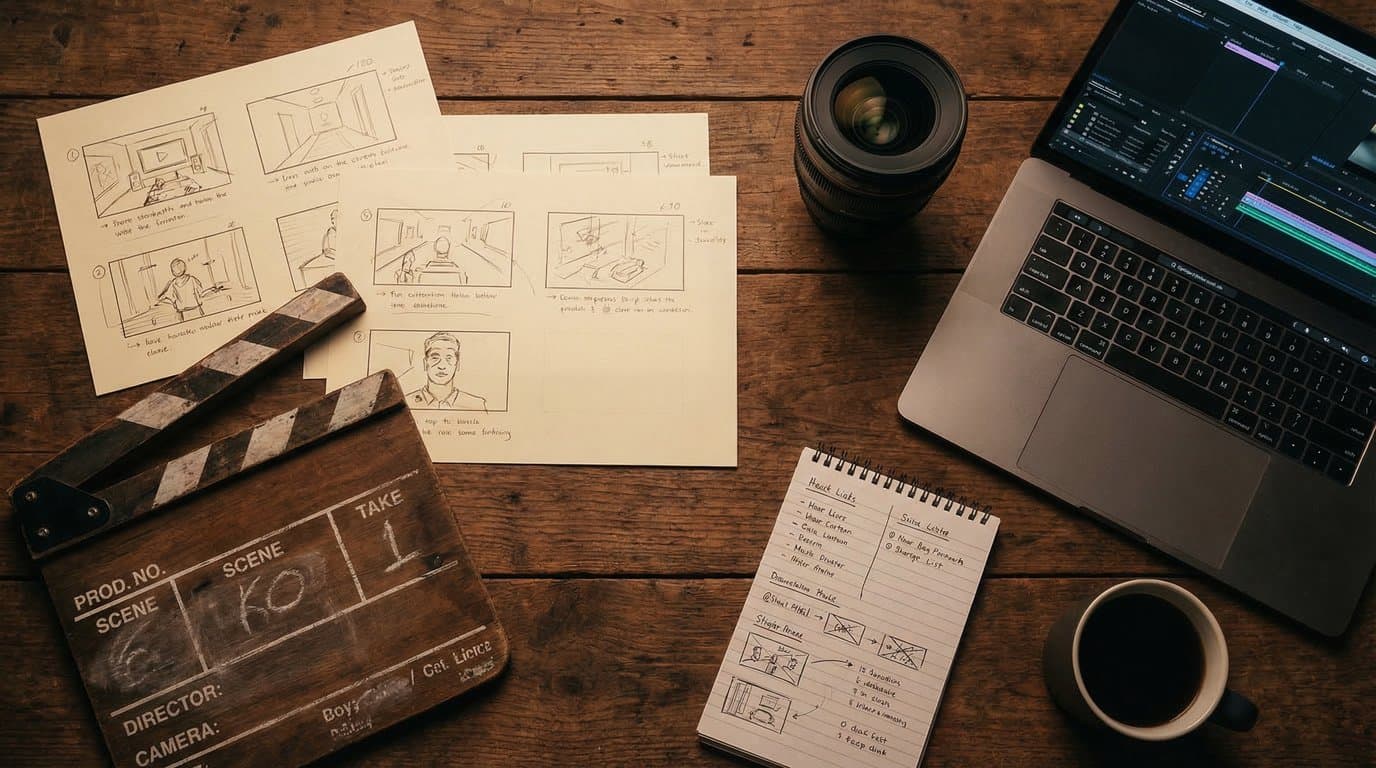
Pre-production planning. Before the shoot, we map out your anchor story — the core narrative — and identify the short-form moments within it. Every interview question, B-roll angle, and process shot is planned with both the long-form film and the short clips in mind. Nothing gets filmed randomly.
Production day. We capture everything in both wide-screen and vertical formats simultaneously. Your team's key talking points become short-form soundbites. The behind-the-scenes moments become Reels. The process or product shots become B-roll for both the anchor film and standalone clips. One setup, layered outputs.
Post-production split. The footage gets cut two ways: the anchor film first, then the short-form library. Clips are formatted for each platform — properly sized for Instagram Reels, YouTube Shorts, and TikTok, captioned, color-corrected, and on-brand.
The result from a single production day: one long-form anchor video and eight to fifteen short-form clips ready to post over four to six weeks.
Michigan Businesses Already Using This Model
This isn't theoretical. It's the production model behind some of the most successful local content Michigan Media House has produced.
The MI People series is the clearest example. Each episode captures a long-form documentary segment — a real conversation with a local entrepreneur, filmed in their actual environment. From that same shoot, multiple short-form clips get cut: a standout quote, a product demonstration, a quick behind-the-scenes moment. One production day. Multiple content formats. Weeks of publishing.
The Prates Place contractor series worked the same way — ribbon-cutting coverage that produced both a documentary-style feature and short social clips that continued performing long after the event.
The pattern holds across local businesses in Grass Lake, Jackson, Chelsea, and beyond: a well-planned shoot gives you the anchor content your website needs and the short-form presence your social channels require.
The Biggest Mistake: Treating Every Video as a One-Off
The businesses that struggle with video marketing aren't filming bad videos. They're filming videos without a system.
A single, one-off video — however polished — fades fast. Algorithms reward consistency. If your business posts once in March, disappears for two months, then posts again in June, you're starting from zero every time. The short-form video strategy for Michigan small businesses that actually works treats every production day as a content system, not a single deliverable.
And the employee and creator-style video approach Michigan businesses are increasingly adopting does exactly this — one person, one environment, one honest conversation, cut into multiple pieces of content that keep working for weeks.
That's the shift: from video as an event to video as an ongoing asset.
What a Strong Hybrid Video Plan Looks Like for Your Business
If you're starting from scratch, here's the practical roadmap:
1. Define your anchor story. What does your business do better than anyone else? What would a first-time customer most need to understand before calling you? That's your long-form film topic.
2. Identify your short-form moments. Inside every good anchor story are five to ten discrete moments — a compelling question, a demonstrable skill, a surprising fact, a behind-the-scenes glimpse. These are your Reels.
3. Plan the shoot day around both. Your crew should know before they arrive which shots are for the anchor and which are for short-form. Both get captured that day.
4. Build a posting schedule. With fifteen clips in hand, map out where each goes: two Reels per week for six weeks, one YouTube Short per week, one clip to your Google Business Profile. Your anchor video lives on your website and YouTube from day one.
5. Track what performs, adjust on the next shoot. The clips that get the most saves, shares, and comments tell you what to dig deeper on next time.
Understanding what drives real video marketing ROI for Michigan businesses comes down to this: consistent presence built from smart, efficient production — not spending more, filming more often.
Ready to Build a Hybrid Video Strategy for Your Michigan Business?
One great production day — planned with both formats in mind — is enough to keep your business visible, credible, and consistent for months. Michigan Media House helps local businesses across Jackson County, Washtenaw County, and greater Michigan plan, film, and publish hybrid video content that actually delivers results.
Get in touch to talk through what a hybrid shoot would look like for your business. We'll walk through your goals, your audience, and exactly how to make one day of filming go further than you might think.