If you run a business in Michigan, you've probably watched the AI conversation go from novelty to noise in about eighteen months. Type a sentence, get a script. Type another, get a fully generated video of a person who doesn't exist, saying words no one actually spoke. It looks impressive in a demo. So the question every business owner is quietly asking is a fair one: do I even need a video crew anymore?
Here's the honest answer, and it's more useful than the hype on either side. AI is genuinely changing how smart Michigan businesses plan and script video. But AI-generated video content — the fully synthetic stuff — is quickly becoming a liability for trust. The businesses winning in 2026 are the ones using AI to think faster and real cameras to earn belief. Let's break down exactly where that line falls.
The AI Video Revolution: What's Actually Changing in 2026
A few years ago, "AI video" meant a stock-footage site with a fancy search bar. Today it means tools like Sora and Runway ML that generate moving footage from a text prompt, plus scripting and planning assistants that can outline an entire campaign in seconds. The barrier to making something has effectively dropped to zero.
That's the part that's real. Video production AI tools in 2026 have collapsed the time between an idea and a rough first draft — for a small business, that used to take a week and a meeting.
But "easy to make" and "worth making" are two very different things. As the cost of generating video has fallen to zero, the volume has exploded — and so has viewer suspicion. The market hasn't just changed how video gets made. It's changed what audiences trust when they see it.
Where AI Tools Actually Help (Scripting, Planning, Ideation)
Let's give AI its due, because dismissing it entirely is just as lazy as worshipping it. Used as a thinking partner, AI is a legitimate upgrade to the front half of any video project.
For AI video production small business owners are getting real value in a few specific places:
- Scripting and messaging. A tool like ChatGPT can turn a rambling voice memo about your business into three tight script options in the time it takes to refill your coffee. You still need to edit it into your real voice — but you're starting from a draft instead of a blank page.
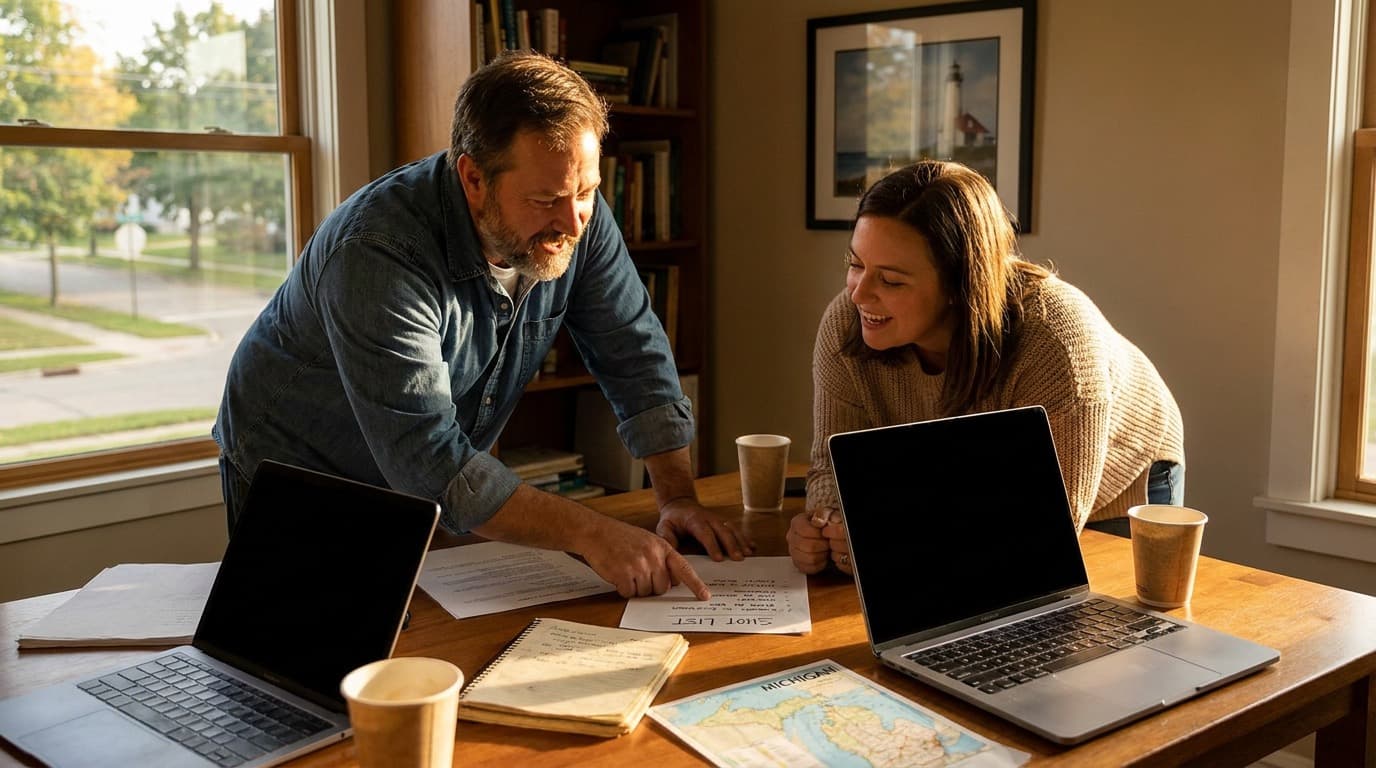
- Planning and shot lists. AI is excellent at organizing. Feed it your goal — "a 90-second video introducing our Chelsea bakery to new customers" — and it'll return a structured shot list, interview questions, and a suggested run of show.
- Ideation. Stuck on what to even shoot? AI is a tireless brainstorm partner. It'll generate twenty angles for your Jackson HVAC company's spring campaign so you can pick the two that actually fit.
Notice the pattern: every one of these happens before the camera turns on. That's where AI belongs — in the planning room, not in front of your customers.
Where AI Falls Short: The "AI Slop" Problem
Now the other side. The internet in 2026 is drowning in what people have started calling "AI slop" — generic, synthetic, soulless content churned out because it's cheap, not because it's good. Estimates suggest well over 20% of new YouTube videos are now AI-generated, and viewers have gotten remarkably good at sniffing it out.
Here's the problem for your business: trust doesn't degrade politely. The moment a customer suspects your video is fake — the too-smooth motion, the face that's almost right, the voice with no breath in it — they don't just distrust the video. They distrust you. Your restaurant, your service company, your storefront. The human video production vs AI debate isn't really about quality of pixels. It's about whether people believe what they're seeing represents something real.
For a local Michigan business, that's fatal. Your entire advantage over a faceless national competitor is that you're actually here — real people, a real place, a real reputation on Main Street. Synthetic video throws away the one thing you can't be beaten on.
Why Authentic, Human-Shot Video Still Wins for Michigan Businesses
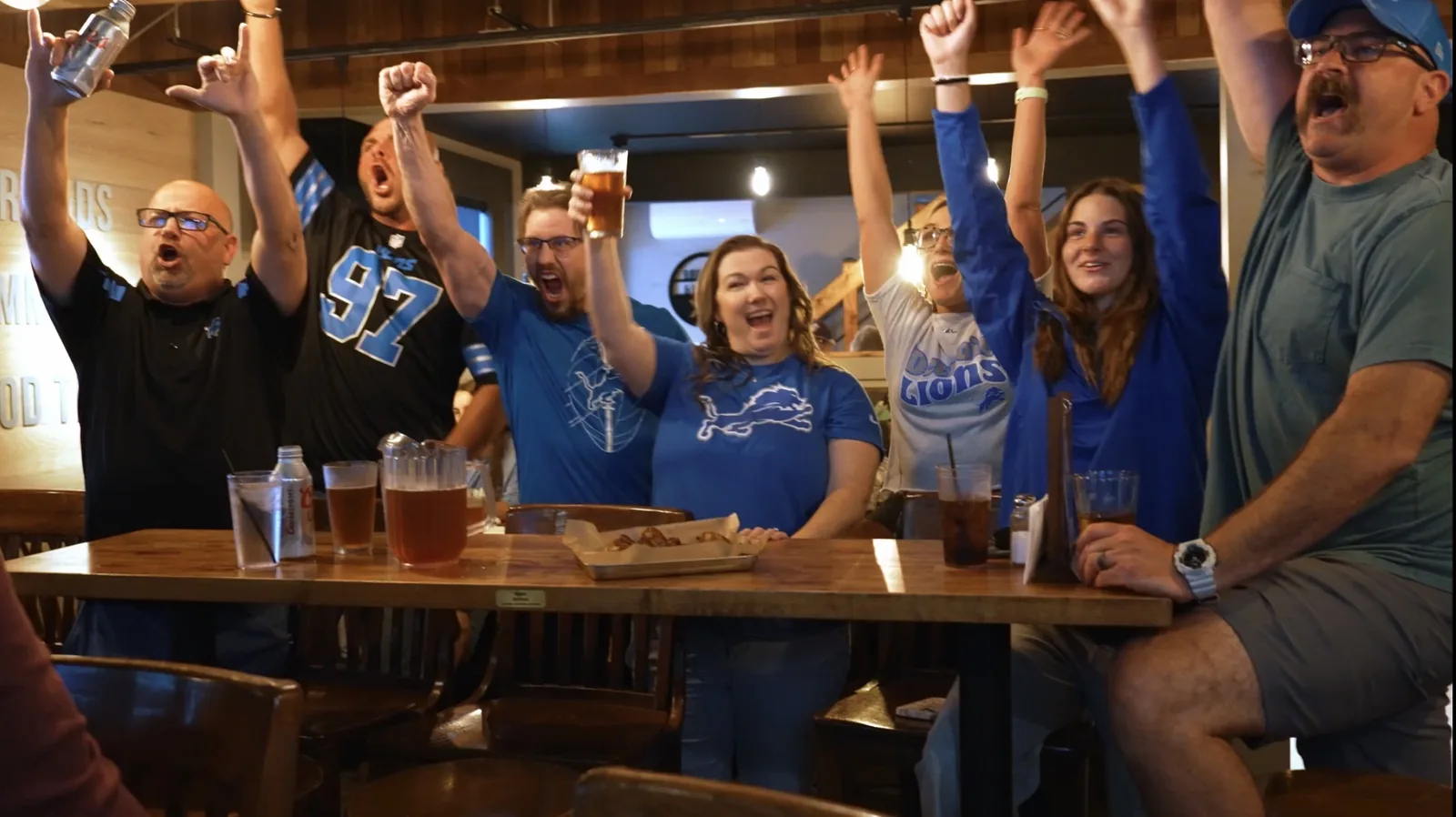
Think about what actually makes someone choose a local business. It's rarely the slickest edit. It's the feeling that these are my people. The owner's face. The real crew in the real kitchen. The actual event venue with actual light coming through actual windows.
Authentic video content small business marketing works because it does something AI structurally cannot: it proves you exist. When a Grass Lake retailer shows their real staff unpacking a new shipment, or an Ann Arbor service company films a genuine customer at their actual home, the viewer's guard drops. That's not a style choice — it's a trust mechanism.
This is also why AI video marketing Michigan strategies that lean on synthetic footage tend to underperform for local businesses even when they look "fine." Fine isn't the goal. Believed is the goal. And belief comes from specificity — a real Michigan winter outside the window, a real accent, a real handshake — the exact details a generative model smooths away. Professional video Michigan crews aren't selling you expensive cameras. They're selling you credibility that's expensive to fake — and increasingly, impossible to fake.
The Smart Approach: AI-Assisted Planning + Professional Execution
So here's the workflow that actually wins in 2026, and it's not "AI or humans." It's both, in the right order.
Use AI to plan. Use a crew to execute.
Start by using AI tools to pressure-test your idea, draft your script, and build your shot list. Show up to the shoot with a plan that's already tight because a machine helped you sharpen it. Then bring in a professional team to capture the real thing — real people, real light, real sound — and edit it with a human eye for pacing and emotion.
You get the best of both: the speed of AI on the planning side, and the trust and craft of human production on the execution side. Your Chelsea restaurant's video gets made faster and lands harder — a combination competitors relying on pure AI slop can't match.
If you want a sense of what professional execution looks like across different needs, our guides on business video production in Michigan, corporate video production, and commercial video production walk through what a real shoot actually involves.
What to Look for in a Michigan Video Production Partner
Not every production company has adapted to this new reality. When you're vetting a partner, look for a few things:
- They embrace AI as a tool, not a crutch. A good team will happily use AI to speed up planning — and will be clear about why your final footage should be real.
- They're genuinely local. They know Grass Lake, Chelsea, Jackson, and Ann Arbor because they work here, and it shows in how your community sees the finished video.
- They lead with authenticity. Their reel is full of real people and real places, not stock-looking gloss.
- They think about trust, not just polish. The best partners understand that your video's job is to make people believe in you.
Ready to Make Video That Actually Connects?
AI has changed the planning room for good, and that's a gift — use it. But the moment your customers hit play, they're deciding whether to trust you. That decision is still won the same way it's always been won: with something real.
At Michigan Media House, we plan smart and shoot real. We'll use every tool that makes your video sharper and every camera that makes it believable — so what your customers see is unmistakably, authentically you.
And if you're wondering where that authentic footage does the most work locally, your Google Business Profile is one of the highest-return places to post it — it's the first thing local searchers see before they ever reach your website.
If you're a Michigan business ready to make video that connects instead of blending into the AI noise, let's talk. Reach out for a consultation and we'll map out exactly what your next project should look like — starting with a plan, ending with something people believe.